








Withdrawal of selected iPOS models – important information in the context of KSeF
February 24, 2026
The first cash register
March 23, 2026
Do you meet the requirements for using a virtual cash register? Check before choosing a fiscal solution.
Do you meet the conditions for using the virtual cash register? This is a question many entrepreneurs are asking themselves today, as they look to simplify sales and reduce the number of devices in their company. A virtual cash register operates as software and can replace a traditional cash register. This allows sales to be conducted via an app on a phone, tablet, or computer.
It's worth remembering, however, that not every company can use this solution. Regulations clearly define which industries can use virtual cash registers. Therefore, before you decide to implement such an application, review a few basic issues. In this article, we explain what a virtual cash register is, who can use it, and what regulatory changes will occur in the coming years.

What is a virtual cash register and how does it work?
A virtual cash register is a cash register that operates as software. This means that instead of a traditional device, you use an app installed on your smartphone, tablet, or computer. The software records sales and transmits the data to the Central Cash Register Repository, a system managed by the Ministry of Finance.
For businesses, this translates primarily into greater convenience. There's no need to use an additional fiscal device, as all functions are handled by the app. Furthermore, many virtual cash registers integrate with sales systems, inventory management programs, or POS systems. This can simplify and enhance sales management, especially for mobile or service-based businesses.
Virtual cash register vs. classic online cash register
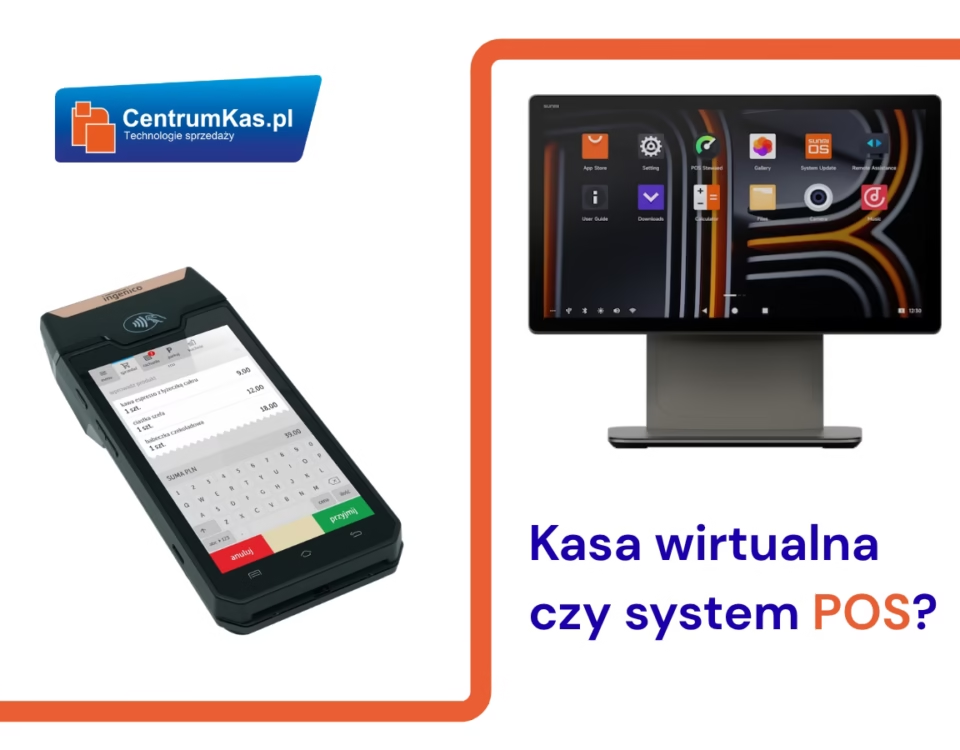
A traditional online cash register is a physical device equipped with a receipt printer and a fiscal module. The seller processes sales directly on the device, which records transactions and sends data to the Ministry of Finance system.
A virtual cash register works differently because it's a computer program. You install it on the device you use every day. Despite this difference, both solutions fulfill a similar fiscal function. Both online and virtual cash registers transmit sales data to the Central Cash Register Repository. Therefore, for regulatory purposes, both solutions are treated as fiscal cash registers.
Would you like to talk about an offer for your company?
Can every entrepreneur use a virtual cash register?
Not every entrepreneur can use a virtual cash register. While this solution seems very convenient, regulations only allow its use in select industries.
The key point is that it's the type of business you do, not how you run it, that matters. Just because you work mobile or use your phone to sell doesn't mean you can use a virtual cash register.
The regulations define a list of activities that can be recorded in this way. In many cases, the classification of services according to the Polish Classification of Goods and Services (PKWiU) is also important. Therefore, before choosing a virtual cash register, it's worth checking whether your business falls within the scope of those permitted by the regulation.
What industries can use a virtual cash register?
Virtual cash registers were introduced primarily for selected service industries. In these sectors, sales often take place mobile or at multiple locations simultaneously. Therefore, a fiscal app can be more convenient than a traditional device.
Passenger transportation
One of the first industries to adopt virtual cash registers is passenger transportation, primarily taxis and other passenger transportation services.
In this case, the fiscal app often integrates with the ride-hailing system or the driver's app. This allows sales to be recorded directly in the ride-hailing system.
Hotel and accommodation services
Virtual cash registers can also be used by businesses providing accommodation services. This applies to hotels, guesthouses, apartments, and other accommodation facilities.
In many cases, the fiscal application integrates with the reservation system or hotel software. As a result, sales can be recorded directly in the guest service system.
Gastronomy and catering
Another industry where virtual cash registers have been approved is the food service industry. This applies to both restaurants and catering companies.
This solution is particularly useful for mobile businesses, such as event management, food truck sales, or field catering.
Sales of solid fuels
Regulations also allow the use of virtual cash registers for the sale of solid fuels, such as coal. In this industry, sales often take place at various locations or directly at the customer's premises.
Therefore, a fiscal application can facilitate sales management and reduce the need to use additional equipment.
Car washes
Virtual cash registers have also appeared in the automotive services industry, primarily in car washes and vehicle cleaning services.
In such locations, the fiscal app often works in conjunction with automated or self-service systems. This allows for faster and more automated sales.
Activities of the Volunteer Fire Department and Rural Women's Circles
Some social organizations can also use virtual cash registers. This includes Volunteer Fire Departments and Rural Women's Associations.
In practice, this solution facilitates the recording of sales during local events, festivals or other social initiatives.
What will change in the regulations from April 1, 2026?
The regulations regarding virtual cash registers will be gradually expanded. From April 1, 2026, the list of industries that can use this solution will be expanded to include additional business areas.
Vending machines
The new regulations will apply to the sale of goods through self-service vending machines. This includes vending machines selling drinks, snacks, and tickets.
In this case, sales can be recorded by a virtual cash register integrated with the vending machine system.
Self-service devices
Another change concerns devices that operate without employee involvement. These could include ticket machines, service vending machines, or automated sales stands.
The extension of the regulations is intended to enable easier settlement of sales in the self-service model.
Electronic parking systems
The new regulations will also apply to electronically operated parking lots. This includes, among other things, parking fees paid via mobile apps or websites.
In such systems, a virtual cash register can record parking fees without the need to install a traditional cash register in the parking device.
Can you use a virtual cash register? Take a quick test.
If you're wondering whether your company qualifies for a virtual cash register, it's worth taking a simple test. Answering the following questions will help you initially assess whether such a solution might be feasible for your business.
Is your business one of the industries permitted by law?
This is the most important question. Check whether your services or sales are included in the directory specified in the Ministry of Finance regulation.
If your business doesn't appear in this directory, you likely can't use a virtual cash register. In this case, you'll need to use a traditional online cash register or a fiscal printer.
Are your sales recorded at the cash register?
A virtual cash register is simply a special form of cash register. Therefore, you can only use it if your sales need to be recorded at the cash register.
If your business benefits from the exemption from the obligation to have a cash register, then a virtual cash register will not be needed either.
Do you use software approved by the Ministry of Finance?
Not every sales application can function as a virtual cash register. The program must meet the technical requirements specified in the regulations.
This means that the software must communicate with the Central Cash Register Repository and meet sales data security standards.
Does your sales model fit with working with the app?
Virtual cash registers are best suited for mobile, service-based, or automated businesses. In such businesses, sales often take place in multiple locations or via IT systems.
However, in classic points of sale, such as stationary stores, entrepreneurs more often choose traditional online cash registers.
When is it better to choose a traditional cash register?
A virtual cash register isn't always the best solution for a company. In many cases, a traditional online cash register or a fiscal printer integrated with a point-of-sale system will be a better option.
This applies primarily to brick-and-mortar stores and points of sale with a high volume of transactions. In such locations, fiscal devices often operate faster and more reliably.
Additionally, many sales systems integrate directly with fiscal printers. This simplifies sales and allows employees to serve customers more quickly.
Summary – will a virtual cash register be a good solution for your company?
Virtual cash registers are a modern solution that can significantly simplify sales records. However, regulations only allow their use in specific industries. Therefore, before implementing them, it's worth verifying whether your business meets legal requirements.
If you're unsure whether you meet the requirements for using a virtual cash register, it's best to consult with an advisor. This will help you avoid regulatory issues and choose the fiscal solution best suited to your business.