








E-receipts – everything you need to know
August 31, 2025
Who should use the online cash register?
January 3, 2026
Online Cash Register or Virtual Cash Register? A Guide for Entrepreneurs for 2026
Every business selling to consumers often faces the difficult task of choosing a fiscal device. Not everyone is aware that there are two solutions available on the market that differ in their operation, costs, legal requirements, and ease of use: the cash register and the so-called virtual cash register, which operates on a phone or tablet. Although these two "cash registers" seemingly fulfill the same function, in practice they are difficult to treat as equivalent solutions. They differ not only in design and operation, but above all in the range of industries in which they can be used. Choosing the right "cash register" therefore has a real impact not only on work comfort but, above all, on data security and compliance with Ministry of Finance regulations.
What is the difference between an online and a virtual cash register?
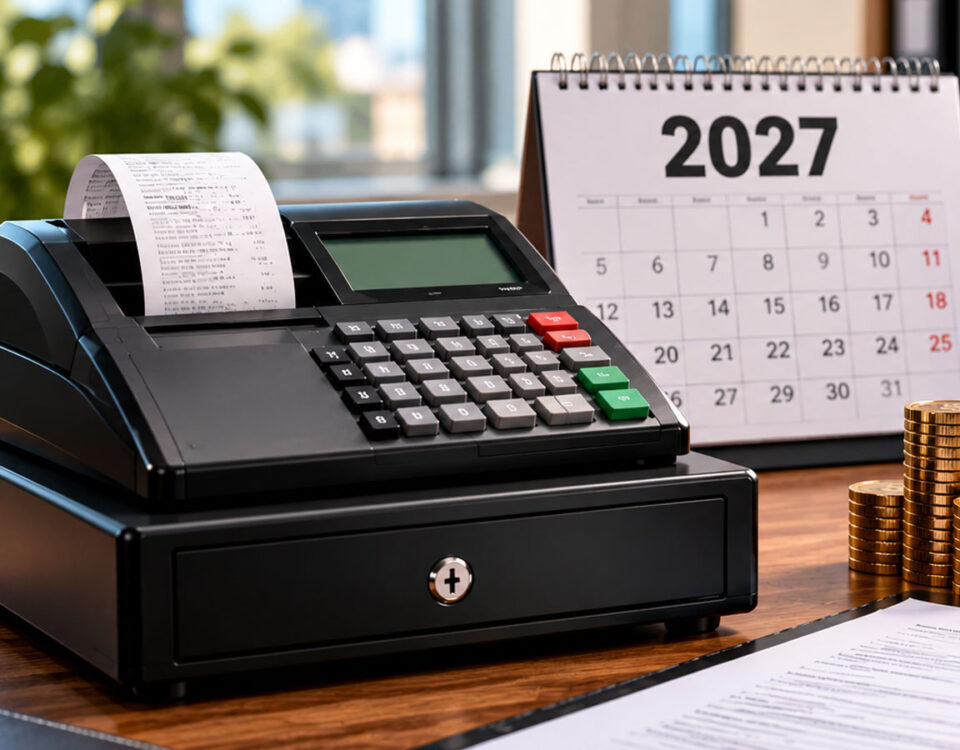
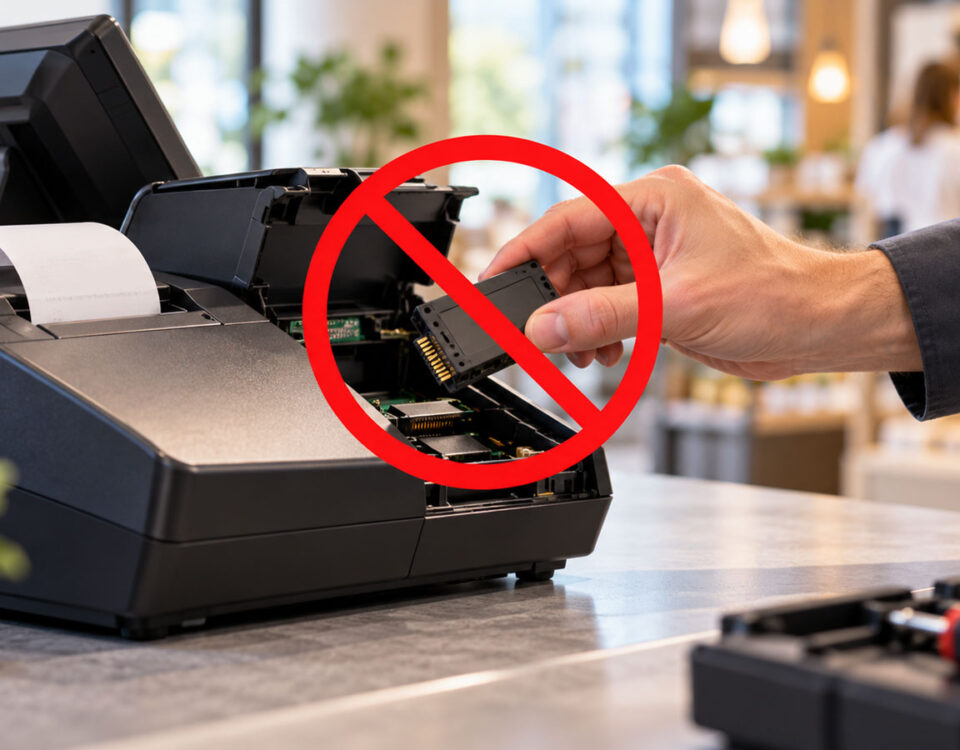
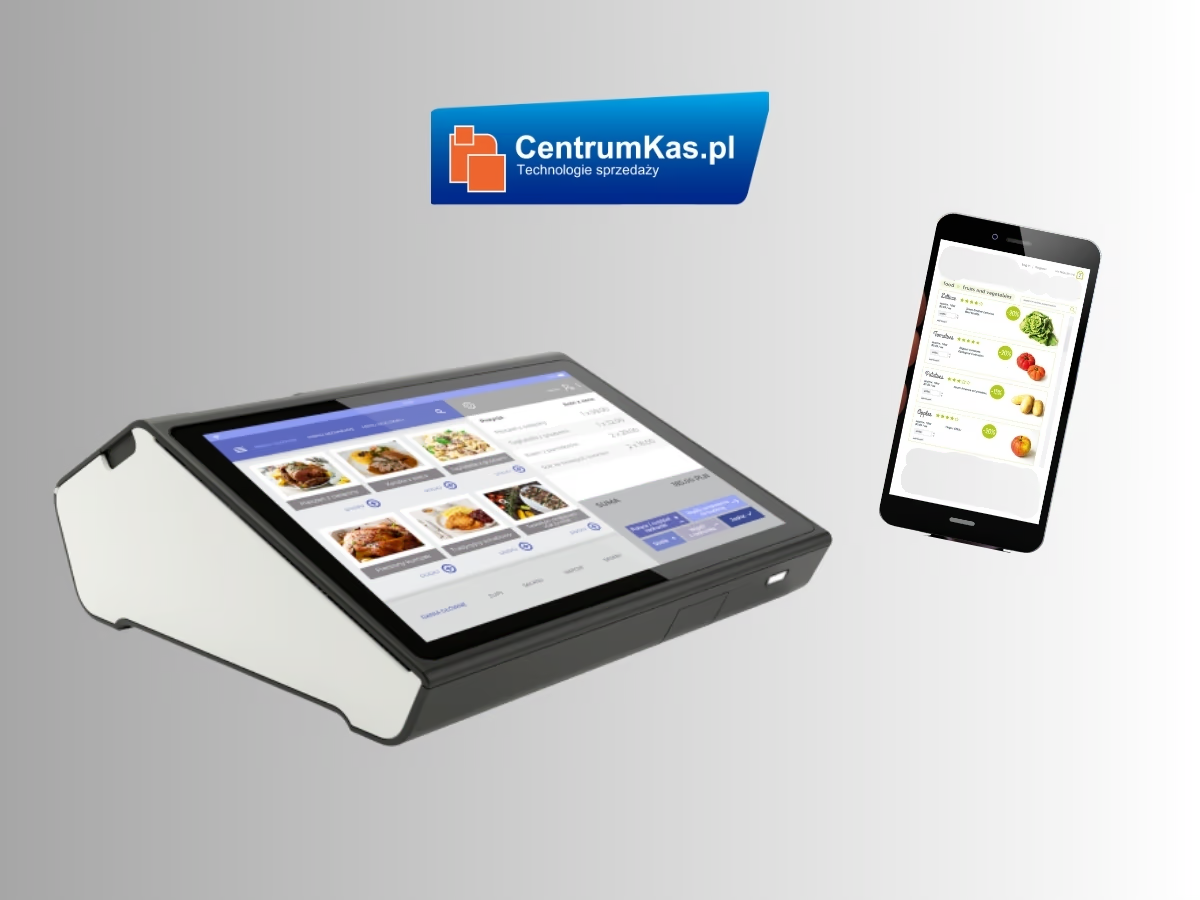
Online cash register It's a physical device, designed exclusively for sales management. The cash register has its own cryptographic module for communication and fiscal memory (the ultimate security line) – a protected memory that cannot be modified by the business in any way. The online cash register is a reliable transaction recorder and is also more resistant to damage and failures, as it was designed for intensive, daily use. Regardless of the model, each online cash register automatically connects to the Central Cash Register Repository (CRK), transmitting the required data about transactions and other events. Importantly, even if the company's internet is temporarily down, the cash register continues to operate and records sales, and data will only be transmitted once the connection is restored. Sales data is stored in the fiscal memory and in a data buffer, which sends aggregated data once the connection is restored.
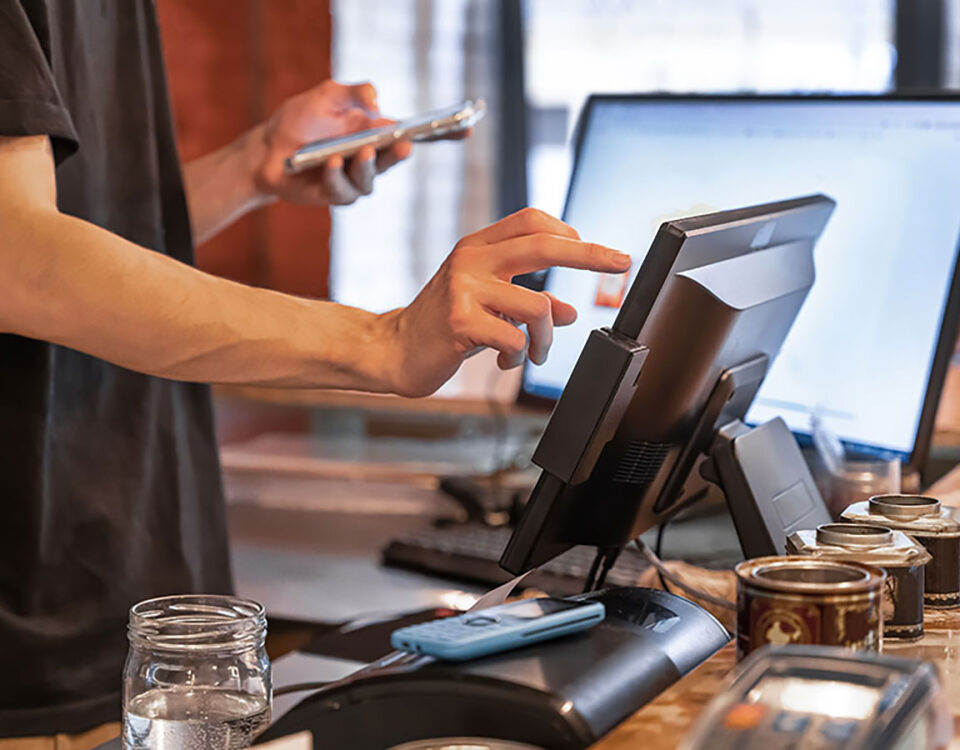
On the other hand virtual cash register It's no longer a device, but merely a fiscal app. It's installed on a smartphone, tablet, or laptop. Importantly, the app alone isn't sufficient—an entrepreneur who wants to efficiently record sales also needs a receipt printer and stable internet access. Why? Because most of the functionality on a virtual cash register operates in real time. The virtual cash register doesn't have its own fiscal module or protected memory, and in the event of a failure, resolving and explaining the sale is still the taxpayer's responsibility. It uses the phone's memory, which isn't as well protected as the memory of a physical device. This solution is therefore convenient and highly mobile, but it has limitations—both technical and legal.
In the case of physical cash registers, the responsibility for clarifying the sale comes down to data recovery, for example, from protected memory or from the laboratory's fiscal module. As a result, the entrepreneur receives a report from the laboratory, which concludes the proceedings.
When starting work, the virtual cash register must also establish a connection with CRK - the central repository of cash registers. Traffic in POS applications increases on Friday by 30-45% - data from one of the leading POS software providers, but Friday is also the most popular day for carrying out work in the Central Cash Register Repository - due to its limitations, the virtual cash register will not start working if it hits such a date.
Virtual cash registers cannot be repaired - any irregularity (e.g. damage to the data structure) results in its closure and the need to read the data, if possible.
Would you like to talk about an offer for your company?
Legal Requirements – What You Need to Know Before You Buy
In the case of fiscal cash registers, businesses are subject to a number of regulations that must be met. Both online and virtual cash registers must communicate with the Central Register of Registers (CRK) and comply with the requirements of the Ministry of Finance. The key difference, however, concerns who can use a virtual cash register. As it turns out, this solution is not available to everyone. The Minister of Finance has specified in relevant regulations the industries that are authorized to use fiscal software (applications). virtual cash register) instead of a physical device. In recent years, this catalog has covered, among others: passenger transport, scheduled transport, selected mobile services, parking lots, mobile catering, and mobile cosmetics. However, if an entrepreneur runs a different business, such as a grocery store, workshop, beauty salon, hairdressing salon, stationary catering, or medical services, they cannot use a virtual cash register. They must have a traditional online cash register.
The second important element is the PLN 700 tax relief for cash registers. This preferential treatment is only available when a business purchases a physical device, i.e., an online cash register. There is no tax relief for a virtual cash register, as it is not a device but a software license. In practice, this means that in many cases, purchasing a traditional online cash register is cheaper, despite the higher initial price, because a significant portion of the cost is covered by the business tax relief for the first fiscal device.
Online cash register – stability and reliability in everyday work
Online cash registers are the most universal solution. These devices are suitable for almost any business. Their advantage over virtual cash registers stems primarily from their design – these devices operate regardless of the conditions in which they are used. They can operate for many hours a day, and their components are designed for intensive use. For businesses, this means a reduced risk of sales downtime, and therefore a reduced risk of losing customers and revenue. With a cash register, even a temporary internet outage won't interrupt sales, which is a huge difference compared to virtual cash registers, which are dependent on the functionality of an app and a mobile device.
Online cash registers are also easy to service. In the event of any malfunction, businesses can use an authorized service center, which will replace the device with a replacement for the duration of the repair. This not only provides convenience but also legal certainty, as all service activities are conducted in accordance with ministry procedures. Combined with the PLN 700 tax relief, this makes online cash registers a predictable and fully controllable investment.
Virtual Cash Register – When Mobility Wins
A virtual cash register has a completely different feel than an online device. Above all, it's lightweight, mobile, and ready to use almost instantly. For businesses operating in the field—for example, regular transport drivers, mobile beauticians, food trucks, or services that perform orders in customers' homes—this can be a huge convenience. Sales are made on a device they already have with them, and the entire process is quick and simple.
However, it's important to remember that a virtual cash register always depends on the phone or tablet's performance. If the device is out of power, freezes, or becomes damaged, sales simply won't begin. The same applies to the internet: a lack of coverage or temporary network issues can disrupt the ability to issue receipts. Therefore, virtual cash registers are best suited for situations where mobility is key and customer traffic is moderate. In cases of intensive sales, a large number of transactions, or the need to manage multiple stations simultaneously, this solution may be less stable than a traditional online cash register.
What's Better for Your Business - A Practical Comparison
Although both solutions are used to record sales, entrepreneurs should view them completely differently. Online cash registers are devices designed for continuous operation. In businesses with high volumes, such as shops, restaurants, workshops, or service centers, device stability is absolutely crucial. Cash registers operate independently of operating system updates and phone battery life. This minimizes the risk of failure or interruption.
A virtual cash register, on the other hand, is a lightweight, convenient, and flexible solution, yet sensitive to environmental conditions. Its advantage is a low entry price, and its greatest strength is mobility. However, for many companies, mobility isn't the most important need, but the assurance that sales can be conducted continuously and under any conditions.
It's worth asking yourself one key question: will my company's cash register operate primarily in one location, or in the field? If the answer is "in one location," an online cash register will be a more reliable and trouble-free solution. However, if your business is mobile and occasional, a virtual cash register can offer greater flexibility and lower costs.
Data Security – Why a Device Wins Over an App
In the context of cash registers, data security doesn't just mean protection against data leaks. It's primarily about ensuring that sales records won't be lost, damaged, or overwritten. Online cash registers are equipped with special protected memory and a fiscal module that prevent the modification or deletion of fiscal records. This is crucial because every sale must be stored intact so that the business can document it during an audit. This is much more difficult with a mobile app. Mobile devices aren't designed with fiscal security in mind. They have different software that can be subject to errors or simply not work with external applications.
This means that in the case of larger companies and intensive sales, a physical device in the form of a cash register will ensure stable sales.
Costs and profitability - what does it look like in practice?
Although online cash registers are more expensive initially, some of the costs are not borne by the entrepreneur. Thanks to the 700 PLN tax relief, the actual purchase price can be significantly lower. Furthermore, an online cash register is a long-term investment and is usually inexpensive to operate. It requires no phone, subscription, or recurring software fees (aside from mandatory maintenance).
A virtual cash register may seem cheaper because you don't pay for the device, only for the license. However, for it to function properly, the business must have a working phone or tablet and a printer. In practice, the annual subscription costs and potential hardware replacement costs can be comparable to those of an online cash register, and in some cases, even higher.
What to choose in 2026 - cash register or virtual cash register?
For most entrepreneurs, the best and safest solution remains the traditional one. online cash register. It's a reliable and stable device, guaranteeing smooth operation even in the absence of internet access. It's also a solution that complies with regulations for all industries. An additional advantage is the possibility of taking advantage of tax relief for the purchase of a first-time fiscal device.
A virtual cash register is a good solution for people working mobile or for companies where sales are not continuous and the need for lightness and flexibility is more important than complete independence from a mobile device.