







What does it mean when the fiscal device memory is full?
October 3, 2020
Buying a cash register in installments – can I apply for relief?
October 25, 2020
Servicing cash registers – 5 most common problems
Cash registers, like any other device, are subject to failures – both mechanical and systemic. What are the most common issues that Polish businesses report to service centers? What is the procedure in the event of a cash register failure?

Cash register service – the most common problems
Even the best cash registers sometimes require repairs. If the fault isn't caused by employee error, it most often indicates a system or mechanical failure. Regardless of the nature of the fault, the device should be inspected by a professional service technician servicing our device. They will determine what exactly is wrong and why it occurred, and then resolve the issue. If the fault cannot be eliminated, they will recommend a different device that is tailored to the size and specifics of your business.
Performing a technical inspection and repair of the device requires specialized knowledge and experience. Therefore, it's best to entrust this task to a reputable cash register service with a proven track record of successful implementation. Satisfied customers are a guarantee that the entity has the appropriate technical resources and know-how. Attempting to repair the equipment yourself is not recommended. It usually only makes the problem worse. What are the most common problems that cash register owners report to service centers?
1. Dysfunction of individual components. Failure of the cash register cover, printing mechanism, or display is a common problem. It's most often caused by normal wear and tear or mechanical damage. A malfunctioning module can usually be replaced without having to replace the entire device.
2. Data loss, inability to create backups and problems with operating the SD card or flash drive. This results in the inability to save any data on external media. In the case of cash registers with electronic backups, this completely eliminates the possibility of the device operating effectively. Sometimes the error lies in the external media, sometimes the cash register itself is to blame.
3. Damage to the fiscal module. This is a serious failure. It requires not only a thorough diagnosis of the device but also complex repair procedures. In some cases, the defect is so extensive that the service center recommends purchasing a new device. Replacing individual components would not be cost-effective.
4. Problems communicating with external devices. Some sales stations are very complex, incorporating, in addition to a cash register, a computer, a payment terminal, a scale, a cash drawer, and a barcode reader. For customer service to run smoothly, communication between these devices must be seamless. If this isn't the case, the problem should be investigated thoroughly. Sometimes, the fault lies with the software of the individual devices.
5. Main battery wear. Every battery loses its properties over time. The rate of its wear depends on many factors, including how often the cash register is used and the conditions in which it is stored. Typically, the battery should be replaced after 3-4 years of use.
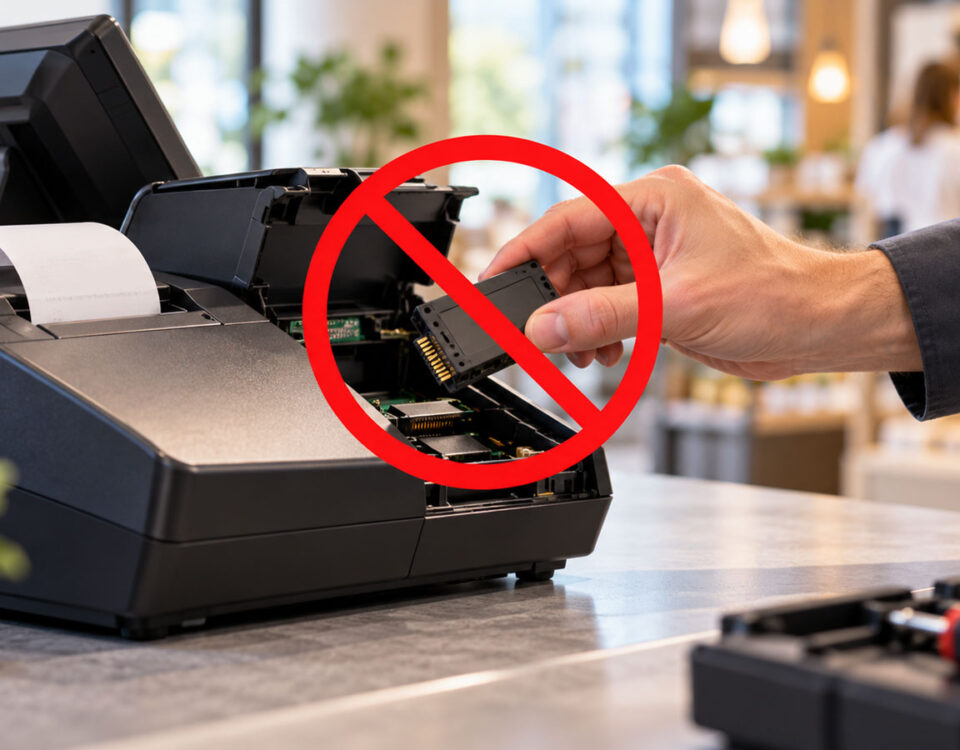
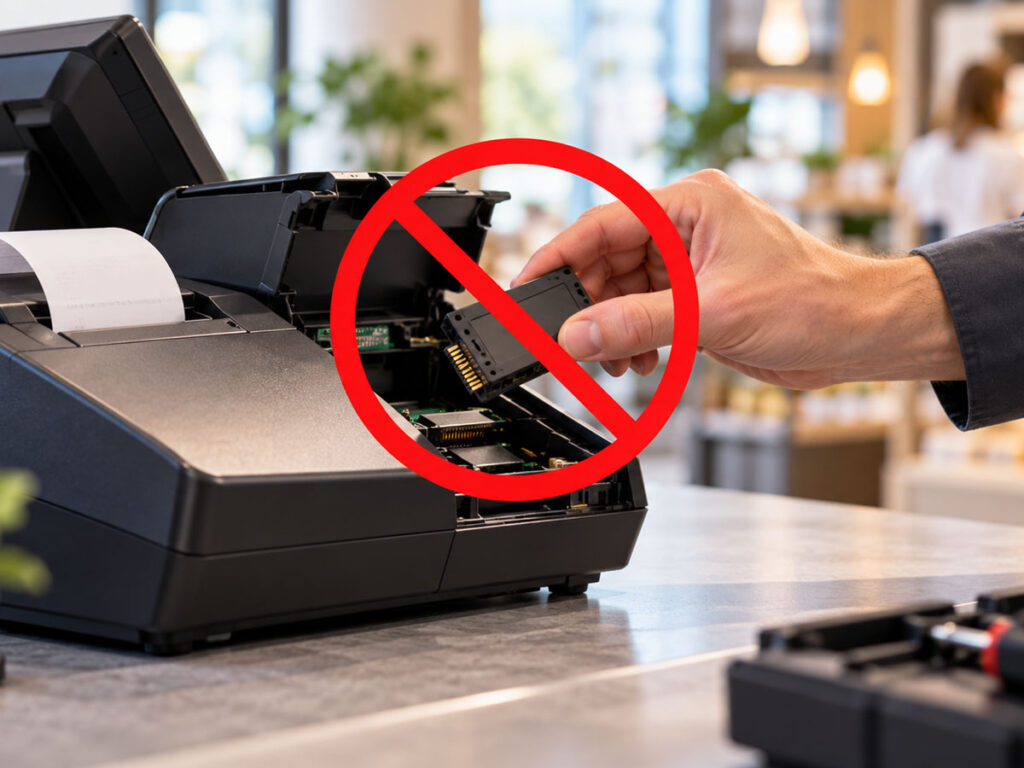
Most cash register repairs require breaking the service seal. Importantly, taxpayers cannot do this on their own. The removal of the fault should always be carried out by authorized service.
If a service technician notices that a seal has been damaged or broken, they are obligated to record this in the service book and notify the Tax Office. If the tax office deems this a deliberate act and an attempt to tamper with the cash register's memory, the taxpayer will not only be required to return the previously granted relief (if they used it), but also pay high fiscal penalty.
Have questions? Ask our expert!

Cash register failure – what to do?
In the event of a cash register failure, the entrepreneur who is legally obliged to record sales and tax amounts using fiscal devices, should stop selling immediately. Unless he has a replacement cash register, he can then continue trading.
Cash registers are devices that boast a low failure rate. However, this doesn't mean that you can forgo checking their technical condition. Quite the opposite. Periodic inspections of equipmentare obligatory and can only be carried out by the service provider. For failure to carry out inspection on time (once every 24 months), the taxpayer will be fined PLN 300.